Human-first, product-led: Manufacturing innovation at scale



At a recent visit with a manufacturer, I heard something familiar: “We have a list of ninety ideas for agent-ification or some kind of AI enablement. But we’ve had that list for a year and nothing's ever happened. What do we do with that?”
I’ve worked with some of the most prominent manufacturers in the US and I am pretty confident that manufacturers don’t lack ideas. Technology isn’t the problem either; many of these capabilities have already been proven. What’s holding manufacturers back is a means to tolerate risk, but more precisely, a rallying reason to tolerate it. Uncertainty, constrained funding and fear of disruption or lost productivity create hesitation and resistance. This often includes clear-eyed people who see real negative company and even personal financial consequences in the face of the latest innovative initiative. That hesitation only turns into paralysis when the financial upside isn’t unmistakably clear. Without a white-hot business case that shows material impact to cost, throughput, quality, or margin, risk feels unjustifiable. The result is familiar: ninety ideas, zero progress.
Innovation under pressure
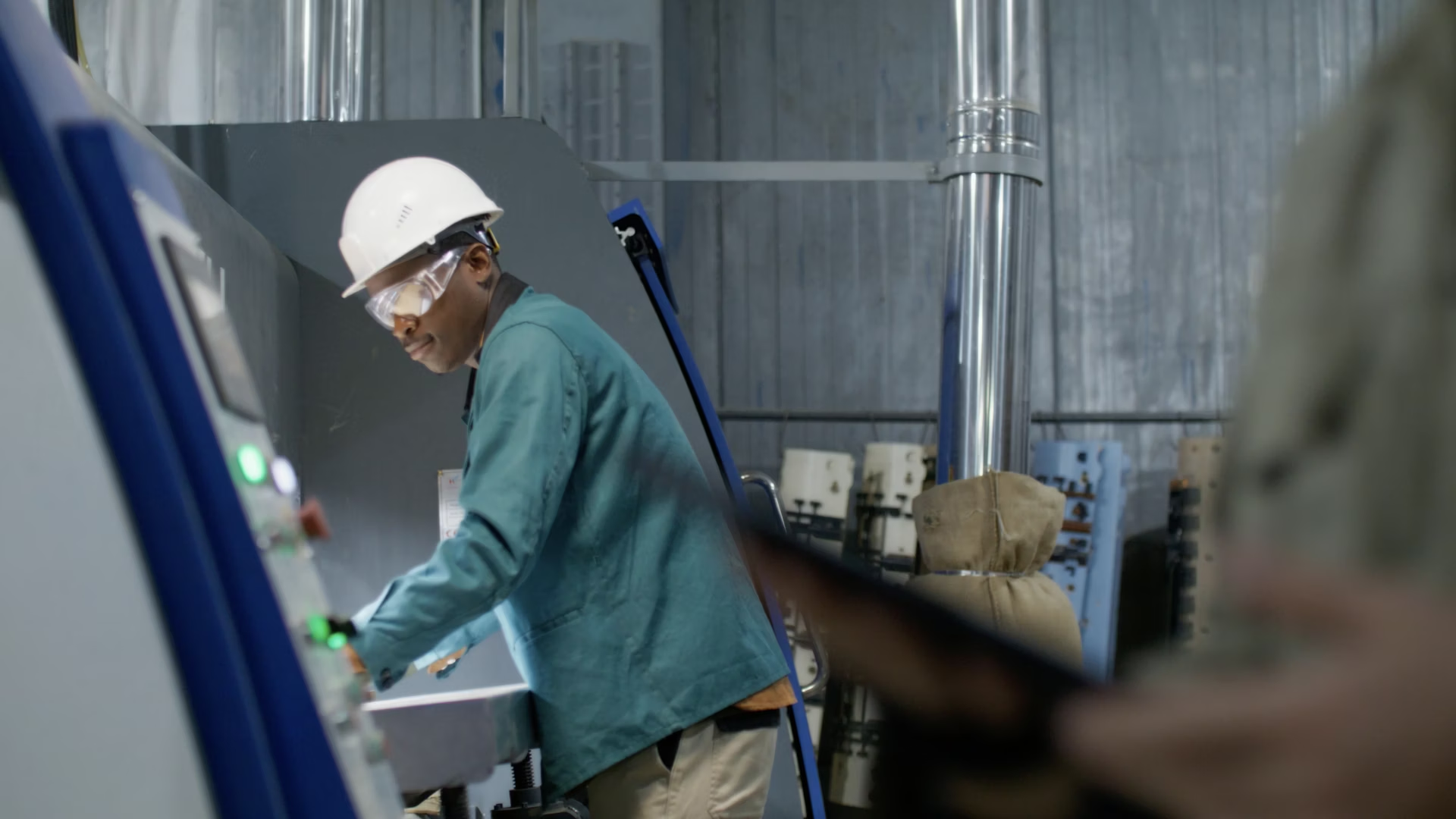
The pressure out there is meaningful. Manufacturers face global competition, chronic labor shortages, rising costs and persistent supply chain issues. Plants are expected to produce more, faster and safer, and due to global worker shortages, with fewer experienced workers and little margin for error. This is not friendly or fertile ground for experimentation.
For many manufacturers, innovation can feel like a high-stakes, very personal gamble. A proof of concept that slows throughput can disrupt schedules and impact revenue. Plant managers can risk loss of their own incentive pay in certain months when new concepts hit the shop floor. The result is understandable hesitation.
Product vs. process innovation
And yet, manufacturers accept this exact tension every day when developing new products.
They invest years in R&D and absorb early losses in pursuit of long-term competitive advantage. The difference is that product innovation is culturally understood as a necessary risk. Process innovation, especially digital innovation on the shop floor, is not accompanied by that same organizational acceptance.
Why manufacturing is different
Unlike digital-native industries, manufacturers don't have the luxury of experimenting in isolation. You can’t just pause the factory floor to try something out. It is a live system where safety, uptime and quality are non-negotiable.
A massively changing workforce presents another very serious challenge. The Manufacturing Institute reports that as many as 3.8 million new employees could be needed by 2033. More than half of manufacturers say that filling open positions — and keeping them filled — is a top concern. In many markets, there are already two to three open roles for every available worker. Experienced technicians are retiring faster than they can be replaced. To handle these changes, manufacturers can’t rely on incremental improvements. They have to fall in love with the problem and try things they’ve never tried before.

Falling in love with the problem
When you have a problem that you fall in love with solving, it conditions you to not play favorites with conventional solutions. You drop your four walls and you get creative about who you might partner with. When all you care about is solving the problem, the world opens up to you. I see this happening right now in global manufacturing spaces and I love it. It’s so exciting because it’s how we’re going to make progress on these big, hard problems.
Innovation means doing things differently
At Launch by NTT DATA, we believe that innovation succeeds when it is treated as a product, not a project. We also take a human-led approach to creating intelligent experiences that drive business impact.
This approach is at the heart of NTT DATA's work in intelligent manufacturing with a leading global manufacturing company. The unique joint effort began with what matters most to manufacturers: how to actually fund innovation that has a clear raison d’etre. Instead of presenting a traditional product proposal for a clear-cut business case, our collective team built a partnership model that ultimately became a joint venture.
The future: Autonomous movement in manufacturing
Together, we developed an automated portal that is a breakthrough software solution helping customers deploy autonomous manufacturing solutions quickly and easily. This digital product removes technical friction, accelerates time-to-value and empowers warehouses and factory floors to easily deploy and manage autonomous fleets. It represents a platform that the next generation of workers, who we call the intelligent trades, are seeking in a Manufacturing 4.0 world – a career that employs timeless and practical trade skills with connected, end-to-end manufacturing innovation.
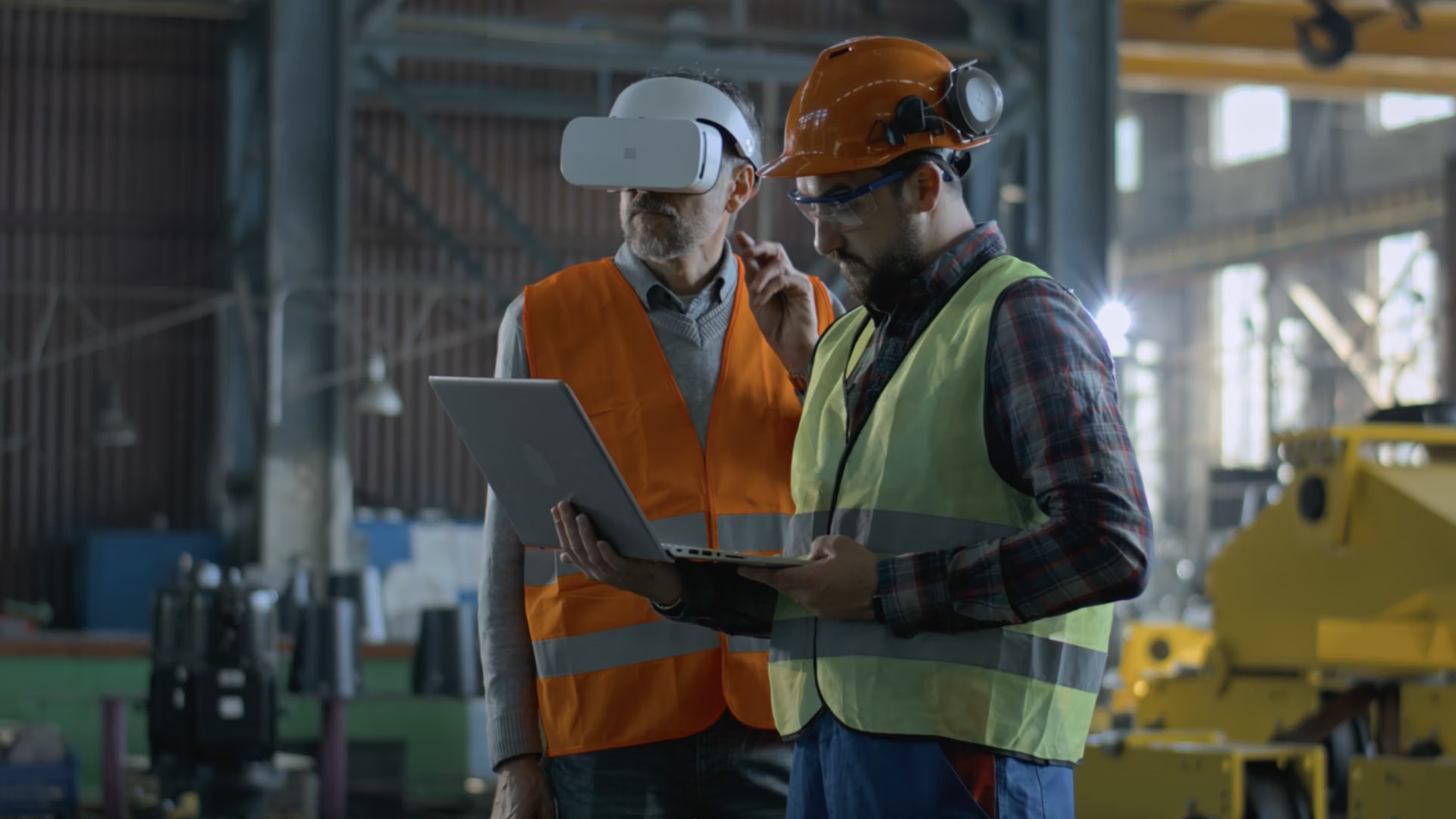
Where this is headed is even more meaningful: autonomous movement in manufacturing. Today’s technological advances mean we no longer need people to handle hazardous chemicals or life-threatening materials as part of their daily work. With safe, precise autonomous handling of materials, workers can live healthier and more prosperous lives.
Building a hedge of protection around progress
Leaders may endorse transformation in principle, but without an environment that allows for temporary performance dips and protected funding in pursuit of long-term gain, innovation efforts will never get off the ground (or the factory floor).
The joint effort between NTT DATA and this leading manufacturing company was built on a shared consciousness and Ways of Working that gives all stakeholders the psychological and financial space to invent without the classic razor-thin margins of error. A culture that aligns incentives, outcomes and accountability across organizations.
Human-first, product-led: Where technology actually works
Perhaps the most important lesson from our joint venture journey is that successful manufacturing innovation empowers the humans at the center of warehouse and factory operations. We can reimagine the process and build systems that reduce risk, capture knowledge, improve efficiency and safety.
Yes, innovation requires risk. Risk with reason. And manufacturing as an industry is both ancient and constantly evolving. From Ford’s Model-T to today’s giga-factories, factory floors have always been at the forefront of change and modernity. When manufacturers approach innovation as a product to be built and refined, ideas stop piling up and start becoming outcomes that justify the risk by strengthening operations and the people behind them.