Building a human-first future with AI

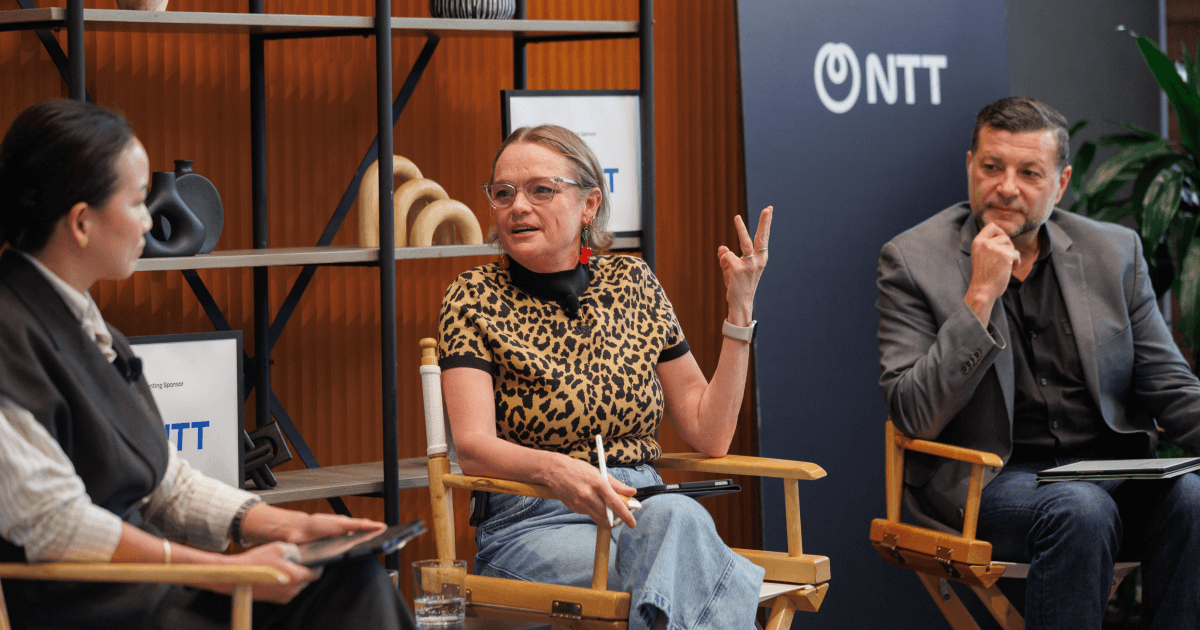
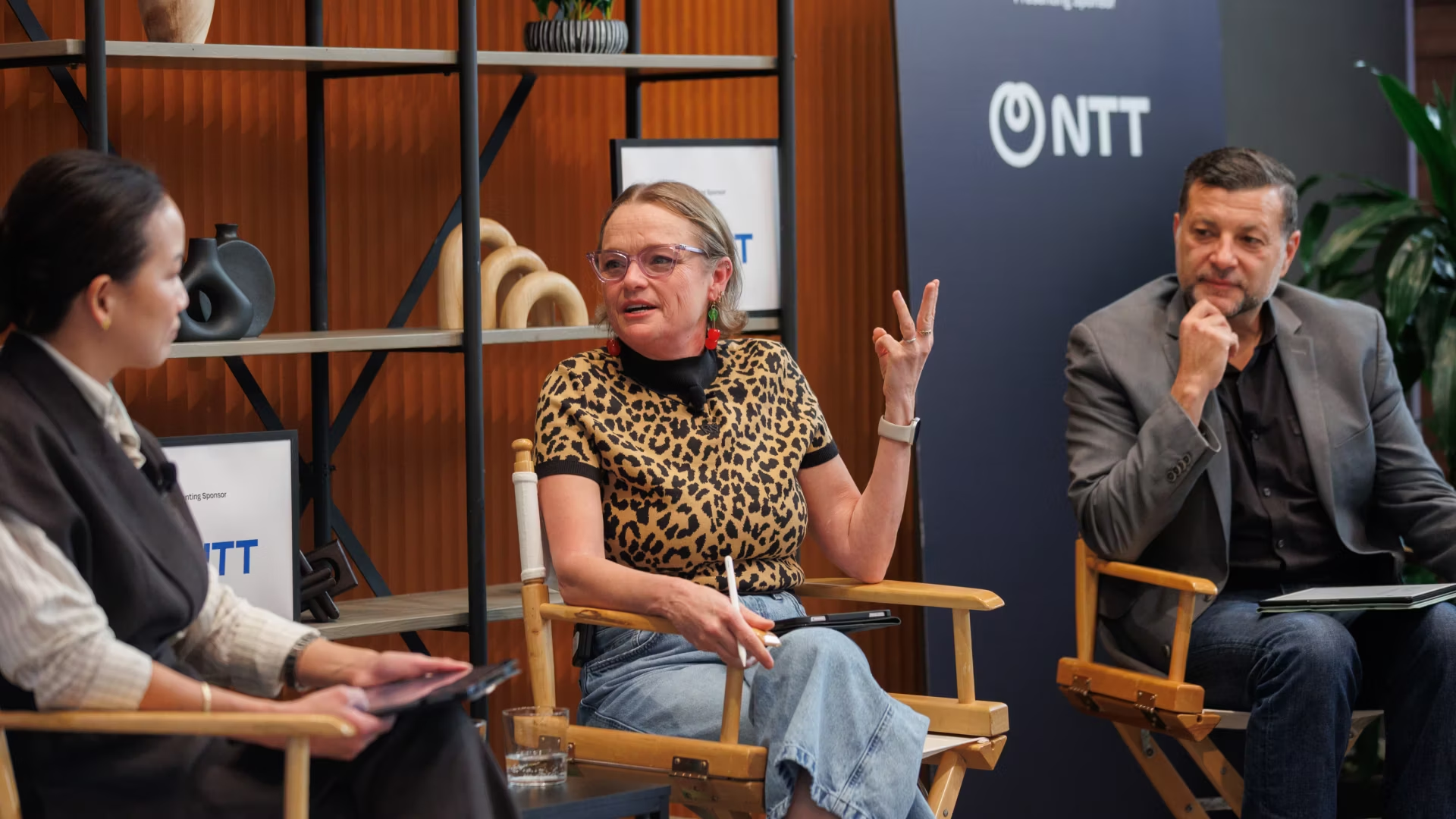
At a recent Wall Street Journal event, I shared a story from early in my career that still makes me smile. In 1996, I was working in Classified Advertising at the San Jose Mercury News. My desk had a fax basket overflowing with job ads that I typed in manually, line by line, so they could be printed in the newspaper. Hours of repetitive typing. It was tedious, but it was also deeply human work. Then everything changed. One of my clients recruited me to Career Mosaic, the first online recruitment site — before Monster and Indeed existed. Overnight, I went from typing faxes to helping build a platform that completely disrupted the way people found jobs. That was my first real taste of how technology can transform experiences, and I was hooked. But I also learned something else: if you don’t keep humans at the center, technology creates consequences you never intended.
We’ve all experienced those consequences. When you call a company for help and the automated system traps you in a loop, frustration builds until you find yourself shouting “Representative!” into the phone. The company didn’t intend to irritate you. They were trying to reduce cost by deflecting calls. But the result was a miserable experience that hurt loyalty, sentiment and trust. This is what happens when technology leads and humans become an afterthought — and in the early stages of AI adoption, I’m seeing the same pattern repeat.
My co-panelist David Armano shared a recent example from Klarna, which replaced 700 customer service roles with AI. On paper it looked like a major win: costs dropped and efficiency increased. But complaints surged, customer satisfaction fell and even valuation was impacted. Their CEO, Sebastian Siemiatkowski, has since acknowledged that overly aggressive cost-cutting damaged the experience and the company is restoring human support. It’s not surprising. You simply cannot remove the human connection from a moment that requires empathy, reasoning or care.
This is why organizations should begin with a different question. Instead of asking, “How can we automate our call center?” start with “Why are people calling us?” Maybe the website is confusing. Maybe a policy doesn’t work. Maybe the product is too complex. Fix the root cause. Eliminate unnecessary calls. And when someone does need help, pick up the phone. You achieve efficiency, yes, but you also create loyal customers, happier employees and stronger long-term business metrics.
Human-first thinking applies to employees just as much as customers. AI can automate tasks, but the real opportunity is augmentation — supercharging people so they can focus on the work that requires creativity, strategy and judgment. At Launch by NTT DATA, our teams identified the tasks that drain them: time sheets, synthesizing research, and other repetitive operational work. These are ideal places to apply AI. Work that once took six weeks can now be done in one. When people help shape the tools that support them, adoption increases. They don’t fear AI — they embrace it.
To get there, organizations need to shift from a cost model to a growth model. I recently heard a distinction that stayed with me: cold technology versus warm technology. Cold technology says, “I can use AI to replace 20,000 people and save money.” Warm technology says, “I can use AI to supercharge the 10,000 people I have so they can do the work of 30,000 — and enjoy their jobs more while doing it.” I vote for warm technology.
For nearly 30 years, we treated digital transformation as if it were a finish line — a moment when companies would become “fully digital.” That moment never came. Technology kept evolving. We kept rebuilding and restacking systems. Now that cycle is accelerating into something bigger: AI transformation. The difference is speed. AI is moving exponentially and reshaping how we work, how we design experiences and how decisions get made. It’s as foundational a shift as the emergence of the internet. And just like digital transformation had no single point of arrival, AI transformation isn’t a one-time metamorphosis. There is no “after.” It is a continuous loop of learning, adapting and improving. This isn’t just a technology journey; it’s a people and organizational journey that requires new skills, new processes, new roles and cultures that reward experimentation and growth.
And culture truly is the differentiator. AI transformation is ultimately a people transformation. Technology accelerates, but organizations move at the pace of their culture. Gartner recently quantified this gap: for every dollar companies invest in AI technology, they should invest two dollars in change management . Not because the tech is difficult — but because helping people adopt new ways of working is where transformation succeeds or fails. Culture determines whether teams feel permission to explore, to question and to reimagine the way work gets done.
Brené Brown, a research professor and renowned author, who also spoke at this event, captured this perfectly: be a learner, not a knower — curiosity beats certainty. Empathy and vulnerability are not soft skills; they are leadership skills. And don’t play not to lose — invest in people the way you intend to win. This is the real work in AI: human first, with technology that augments people and helps teams move with courage and clarity.
That’s how we build what’s next.
Get a preview of our latest research: 2026 Global AI Report: A Playbook for AI Leaders.